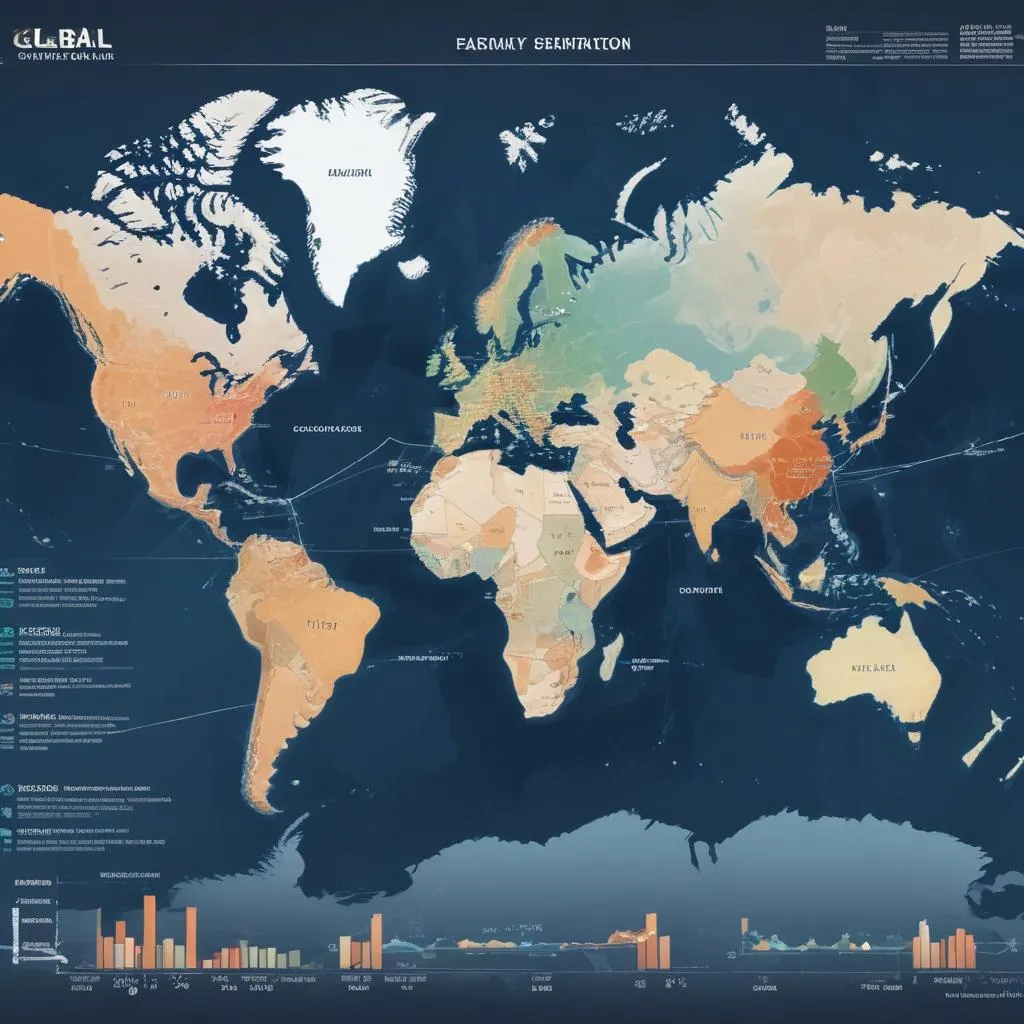
The post-Cold War era was defined by globalization—a world of increasingly integrated trade, finance, and supply chains. Today, that trend is reversing. Geopolitical tensions, national security concerns, and a push for resilience are driving a fragmentation of the global economy into competing blocs. This shift isn't just political; it carries profound and far-reaching financial consequences for businesses, investors, and consumers worldwide.
What Is Economic Fragmentation?
Economic fragmentation, often called "deglobalization" or "geo-economic decoupling," refers to the process where global economic integration unravels. Nations and regions prioritize security and self-reliance over efficiency, leading to:
- Trade Barriers: Increased tariffs, export controls, and "friend-shoring" policies.
- Technological Decoupling: Separate tech ecosystems (e.g., semiconductor supply chains).
- Financial Balkanization: Divergent regulatory standards and payment systems.
- Supply Chain Reshoring/Nearshoring: Moving production closer to home for security.
This fragmentation creates a world less connected and more divided along geopolitical lines, fundamentally altering the financial landscape.
Key Financial Consequences
1. Higher Costs and Persistent Inflation
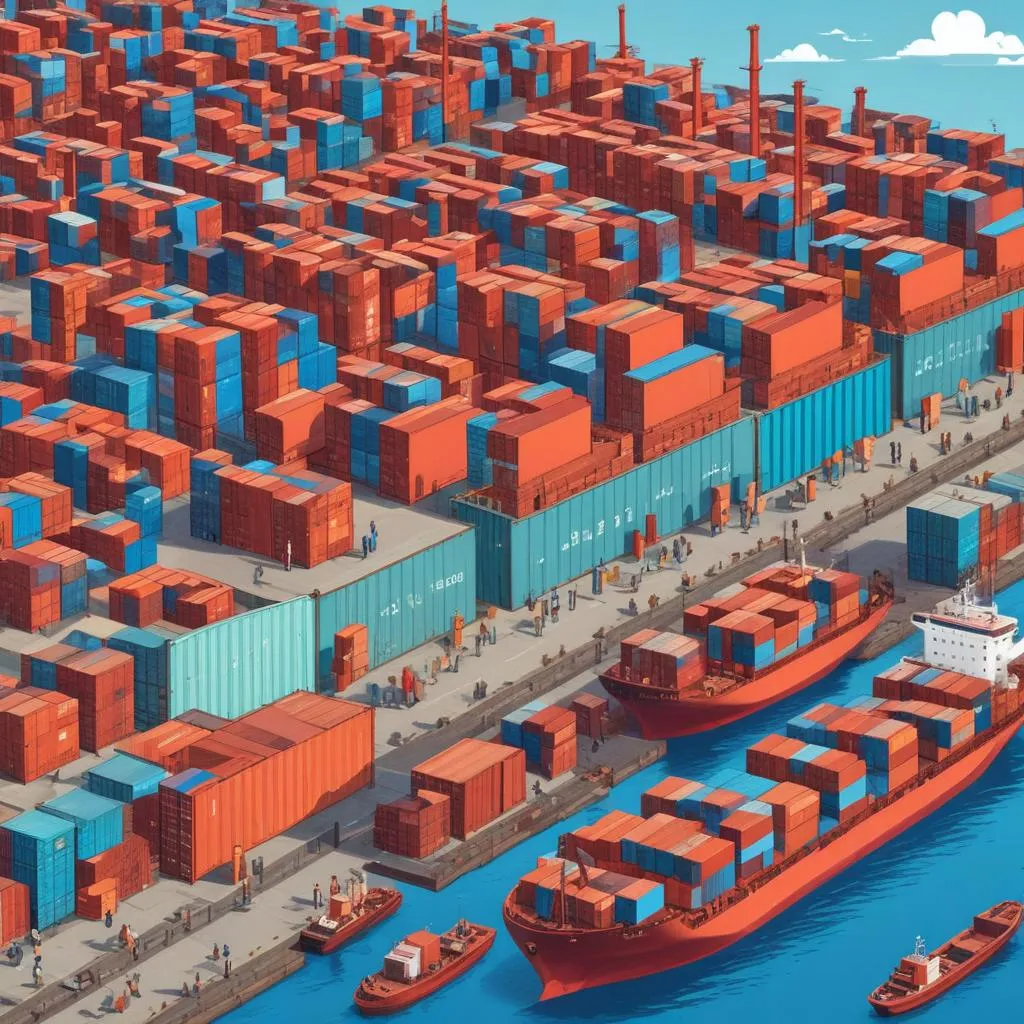
Globalization was a powerful deflationary force, enabling access to low-cost labor and efficient global production. Fragmentation reverses this. Duplicate supply chains, reduced economies of scale, and logistical complexities inherently increase production costs. These costs are ultimately passed to consumers, creating a structural upward pressure on inflation that central banks may struggle to tame with interest rates alone.
2. Capital Allocation Shifts and Investment Inefficiency
Capital will no longer flow solely to the most efficient global opportunities. Strategic priorities will redirect investment. We'll see massive capital expenditure in redundant capacity (e.g., building chip factories in multiple regions) and in securing strategic resources. While this boosts investment in some sectors, it represents a net efficiency loss for the global economy, potentially lowering long-term growth and returns.
Financial Takeaway: Investors must now weigh geopolitical alignment and supply chain security alongside traditional financial metrics, fundamentally altering risk assessment models.
3. Increased Volatility and Risk Premiums
A fragmented world is a riskier one. The threat of sudden sanctions, trade disruptions, or technology embargoes increases systemic risk. Financial markets will demand higher risk premiums for cross-border investments, especially those spanning rival blocs. Currency volatility may rise as trade flows and capital movements become less predictable.
4. Corporate Strategy and Profitability Pressures
Multinational corporations face a daunting triple squeeze: they must invest in resilient (and costly) supply chains, navigate complex and conflicting regulatory regimes, and potentially lose access to key markets or suppliers. This will pressure profit margins and force a reevaluation of global operating models. Companies with flexible, regionalized operations may gain a competitive edge.
Sector-Specific Impacts
- Technology & Semiconductors: Massive duplication of CAPEX, but potential for regional champions. R&D may become siloed.
- Energy & Commodities: Security of supply trumps cost, reshaping trade routes and boosting investment in critical minerals.
- Finance & Banking: Fragmentation of payment systems (e.g., alternatives to SWIFT) and capital markets. Compliance costs soar.
- Defense & Industrials: Increased government spending on national security and allied supply chains drives growth.

Navigating the New Financial Landscape
For investors and business leaders, adaptation is critical. Strategies include:
- Geographic Diversification: Spread assets and operations across aligned economic blocs to mitigate concentration risk.
- Focus on Resilience: Prioritize companies with strong balance sheets, flexible supply chains, and pricing power.
- Thematic Investing: Capitalize on trends like supply chain automation, cybersecurity, and energy independence.
- Enhanced Due Diligence: Deeply analyze geopolitical exposures in investment portfolios and supplier networks.
Conclusion: A Less Efficient, More Expensive World
The financial impact of a fragmented global economy points toward a future of higher costs, lower efficiency, and increased volatility. While it may foster regional resilience and certain domestic industries, the net effect is likely a drag on global economic growth and a redefinition of what constitutes a "safe" investment. Success in this new era will depend on the ability to navigate complexity, manage heightened risk, and adapt to a world where the rules of global finance are being rewritten in real-time.